
Golden Hedgehogs IDENTIFICATION…
Making small changes which make a big difference for hedgehog survival. From small steps to big results, together our community can be the reason hedgehogs flourish.
GOT A HEDGEHOG?…
The first thing to remember is hedgehogs, being nocturnal, will be curled up fast asleep in a quiet corner when we’re typically in the garden. So you’ll either need to watch from a distance at dusk and don’t use a torch. They are very sensitive to light and are very shy creatures that can easily become stressed. Or use a wildlife camera, or more realistically, look for the subtle clues that hedgehogs have passed through during the night.
There are some tell-tale signs that you have had a hedgehog visitor in your garden. This might include the leaves, compost and log piles being disturbed. If you already have a hedgehog house or a feeding station set up, you can check if the hedgehog food has been eaten or if there have been signs of movement. Place a large leaf over the entrance and check back in the morning to see if it’s moved.

HEALTHY HEDGEHOG POO…
Signs of possible problems:
- Green or runny droppings: Can indicate digestive upsets, sometimes linked to a poor diet, spoiled food, or parasites.
- Strong, foul smell: Healthy hedgehog poo has only a light odour. A noticeably unpleasant smell may signal internal parasites, infection, or illness.
- Presence of worms: Occasionally, hedgehog droppings can contain visible worms — a sign the animal may be carrying a heavy parasite load.
- Very watery droppings: Usually a sign of digestive upset, infection, or parasites. If this continues, the hedgehog can quickly become dehydrated and weak
If you regularly notice green, smelly, or worm-filled hedgehog poo, it’s worth contacting your local hedgehog rescue for advice. These signs may point to health problems that need professional care.
REPORTING SICK ANIMALS…
Call the British Hedgehog Preservation Society on 01584 890 801 for the phone number the local hedgehog rescue and seek advice. This will most likely be the South of Scotland Wildlife Hospital in Dumfries, but it is important to check, in case they are overloaded with rescued animals. See guidance on helping hedgehogs in need HERE.

HEDGEHOG TRACKS…
Hedgehogs have regular routes they follow each night and leave telltale ‘tunnel’ hedgehog tracks through longer grass, shrubs and hedges, as well as gaps in fences. Dewy mornings are a good time to spot the tracks of passing hedgehogs.
It’s not unusual to find several zig-zag tracks across a dewy springtime lawn, where hedgehogs have been busily tracking back and forth seeking grubs, bugs and worms. They’ll rise at dusk and forage throughout the night, snuffling and snorting and trying to put on as much weight as they can.
RECORDING YOUR SUPPORT…
Please record your conservation support for hedgehogs on The BIG Hedgehog Map so that we can see how you’ve helped.
Hedgehog sightings should be recorded HERE.
Thank you.

KEEPING THINGS CLEAN…
Hedgehogs often poo while feeding, so extra care is needed around bowls and feeding stations. Droppings can build up quickly in these areas, so it’s important to clean bowls and feeding and water areas regularly with hot water (avoid harsh chemicals) to minimise parasites and keep your prickly visitors safe and healthy.
HEDGEHOG NOISE…
What noise does a hedgehog make? Hedgehogs are unexpectedly noisy creatures, snorting and snuffling as they forage in the undergrowth. Scratching sounds supported by pig-like grunts and snorts indicate the presence of a hedgehog. Often huffing and puffing while searching for food, they can also be heard hissing, snarling, growling, clicking, and even screaming.
The presence of hedgehogs in gardens is often identified by the noise they make rather than by sight, as they snuffle through the undergrowth searching for food. This snuffling can be so loud you can hear it from some considerable distance away.
They hiss when anxious and feel their personal space has been invaded, either by other hedgehogs or animals, including humans. This means they want to be left alone. If they feel threatened, they’ll curl up in a ball and bristle their spines while clicking and snarling, making their bodies jump and convulse to drive the threat away.
If attacked or injured, hedgehogs will scream. Their screams are indistinguishable from human cries, and the police have been called out many times by worried neighbours thinking someone is in distress or being attacked. Hedgehogs also indulge in lengthy mating rituals, which often include their entire vocal repertoire, from huffs, puffs, clicks and screams.
Hedgehog poo…
Hedgehog droppings are usually:
- Dark brown to black in colour
- Shiny (because of insect remains like beetle wing cases)
- Cylindrical in shape
- Around 3–5 cm long and 1 cm thick
- Often slightly curved, with blunt ends
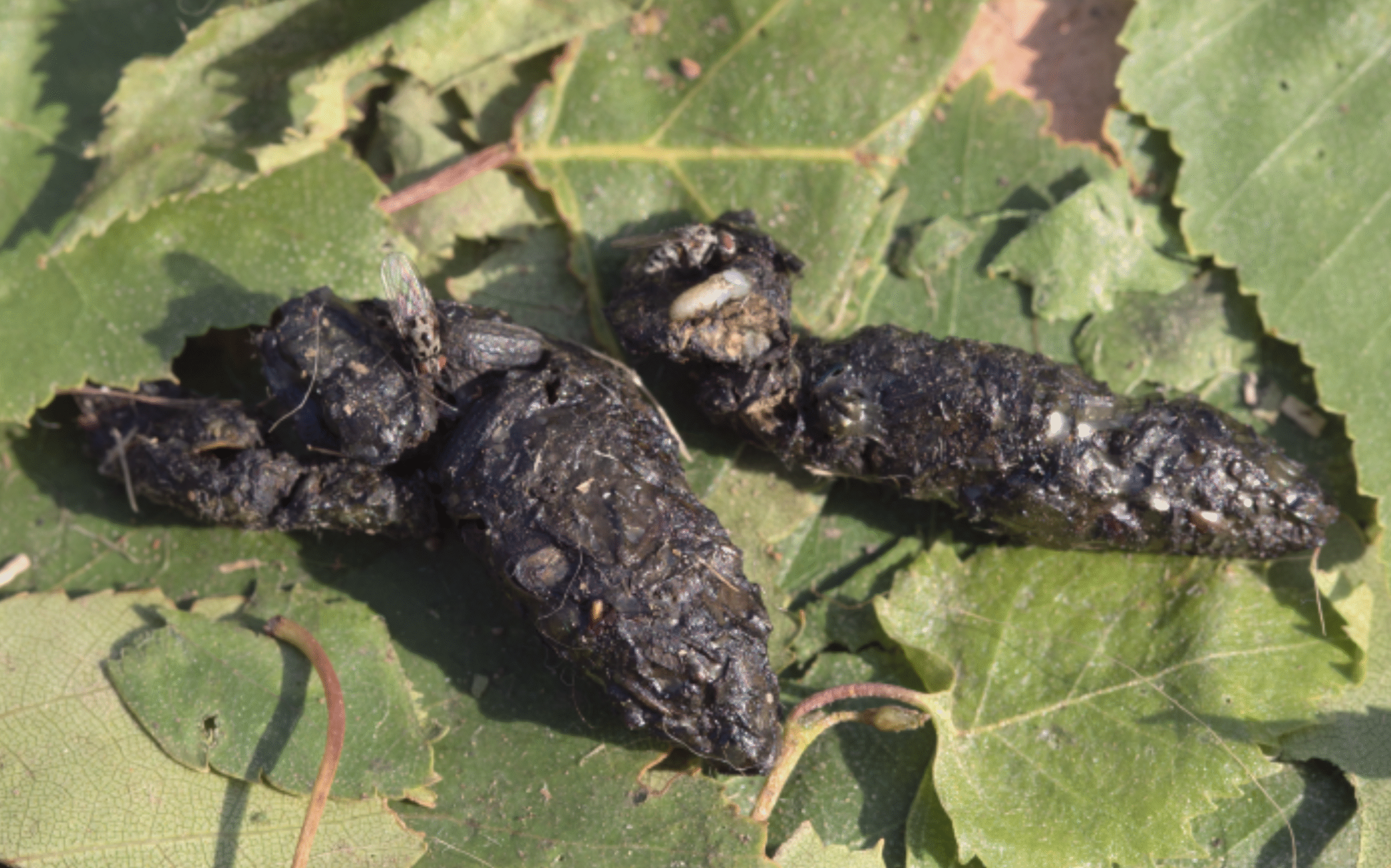
You’ll usually find hedgehog droppings scattered individually rather than in neat piles. Unlike badgers, which return to specific latrines, hedgehogs roam widely during their nightly foraging, leaving droppings as they go.
The shape and texture of hedgehog droppings is directly linked to their diet. Hedgehogs are primarily insectivores, with a taste for crunchy beetles, caterpillars, worms, earwigs, and millipedes. The indigestible bits, such as wing cases and exoskeletons, pass through and give their droppings that dark, shiny, slightly gritty appearance.
In summer, when insects are abundant, hedgehog poo is often packed with these fragments. In spring and autumn, droppings may look softer and less shiny if they’ve been feeding on worms or fallen fruit.
Hedgehogs don’t carefully choose toilet spots. Instead, they leave droppings wherever they happen to be wandering. That makes poo one of the easiest clues to their presence, especially if you don’t see the hedgehogs themselves.
You might spot droppings:
- On lawns – left behind after feeding on worms or beetles
- On garden paths or patios – often noticeable in the morning
- Near hedges, fences or walls – along the routes they patrol at night
- Close to feeding stations or water dishes – if you provide supplementary food
A scattering of droppings in several parts of the garden usually means a hedgehog is regularly visiting.
HOW LONG DO THEY LIVE?…
A wild hedgehog in the UK is expected to live for 2-3 years, however, they can live up to 10 years. In the UK we know that only four hedgehogs in 1,000 make it past the age of seven. So although we know hedgehogs have the potential to live a longer life, why is the average lifespan so short?
There are various factors that impact this, including the portion of hoglets that don’t make it out of the nest. The natural world presents many dangers, as do the threats created by humans. Hibernation is another difficult time for hedgehogs, with starvation being the primary cause of death, alongside extreme weather, predators and poorly constructed nests that do not protect the hedgehog through winter.
Natural injuries, illness and disease, road accidents, and garden injuries all mean hedgehogs are not living as long as they should.
You can make small changes which make a big difference for hedgehog survival.Making small changes which make