
Golden Hedgehog Gardening…
Making small changes which make a big difference for hedgehog survival. From small steps to big results, our community can be the reason hedgehogs flourish.
Hedgehogs Like It Wild…
Let the plants go wild in a corner of your garden: they need messy edges, safe corridors, leaf litter, and places to move unseen. They’ll also benefit from the abundant insects. Wildlife-friendly planting from easy-to-grow bug favourites like hostas, to nectar-rich wild flower turf, many plants will provide wildlife with much needed food and hedgehogs with natural insect prey. Hedgehogs will eat the insects attracted by fallen fruit. Gather fallen leaves into piles around the garden. These will provide nesting materials as well as attract insect prey. Compost is another ideal place for a hedgehog to make a nest and rear its young. Take care when turning the heap; one thrust of a fork can easily kill more than one baby hedgehog.
To build a hedgehog friendly log pile click HERE.
Why not build a ‘dead hedge’ as it creates a habitat for insects and beetles as well as a rich feeding ground for small mammals such as hedgehogs. Long found in managed woodlands and reserves, dead hedges are increasingly being used in gardens as a great way to repurpose woody ‘waste’ into habitat and even a design feature. Click HERE for more information.
If you have any bare soil in your wild patch or wider garden, you can plant native wildflower seeds, plug plants or bulbs to support garden wildlife. Click HERE for a guide to wildflowers.
Adding a wildlife pond is a massive boost for nature. Even a small pond can be home to an interesting range of wildlife, including damsel and dragonflies, frogs and newts. It could also become a feeding ground for birds, hedgehogs and bats – the best natural garden pest controllers!
Click HERE for a quick guide to pond building.
DEAL WITH NETTING AND LITTER…
Hedgehogs are prone to getting tangled. Plastic drink can rings, elastic bands and netting are all common offenders. Replace netting with a rigid structure or use a thick cordage and keep taut. Sports and garden netting should be tied up or stored inside when not in use. Every year hedgehogs are injured by litter and starve to death after getting trapped in discarded rubbish. Barbed wire should also be kept off the ground and never left trailing or carelessly discarded.

Garden Machinery Dangers…
Hedgehogs will not run away from the sound of a mower or strimmer – check before you cut and avoid causing horrific injuries or death. When cutting long overgrown areas check for hedgehogs and other wildlife, then cut initially to about a foot long. Check again before cutting any lower. Robotic lawnmowers also pose a risk to hedgehogs so make sure to check areas thoroughly and don’t run them at night.
MAKE YOUR POND SAFE…
Hedgehogs are adept swimmers, but if they can’t climb out of steep-sided ponds or pools they will drown. Use a pile of stones, a piece of wood or some chicken wire to create a simple ramp. Keep ponds topped up, especially in hot weather so hedgehogs are less likely to topple in. A shallow pond is best with an escape route so hedgehogs can have a drink in safety. Children’s paddling pools and sandpits are also a danger when filled with rainwater. Keep pots etc that might fill with water upside down. Also cattle grids can be a problem as hedgehogs fall in and can become trapped. A simple rough surfaced ramp placed in the grid will save lives. your pond safe.
BE CAREFUL WITH BONFIRES…
Piles of debris are irresistible to a hedgehog looking for somewhere to hibernate or nest.
Here are some tips to help you avoid harming hedgehogs in your bonfire pile:
- Store materials for your bonfire in a safe place – then on the day you want to light it, move them to a different patch of ground.
- Build the bonfire on the same day that you will light it. The longer it’s left for, the more likely it is that a hedgehog will wander in.
- Always place the bonfire on open ground – never on a pile of leaves as a hedgehog may be hiding underneath.
- Always check the entire bonfire for hedgehogs before lighting it. The base should be lifted up with poles or broom handles (not a fork!) and a torch shone in to look (and listen) for any wildlife or pets in need of rescue before lighting.mThey tend to hide in the base of the centre of the pile.
- Once checked, light from one side only to allow an escape route for anything you may have missed. Follow these tips to avoid a tragic end.
If you do find a hedgehog then move slowly and calmly. Pick it up with gardening gloves, along with any nesting material it may have been sitting in, and place it in a cardboard box lined with newspaper. Relocate the box to a safe location and release the hedgehog under a bush or log pile.
DRAINS & Manholes…
Open drains and steep sided ditches are extremely dangerous. Newly dug footings can attract hedgehogs due to the likely presence of unearthed invertebrates, but they can easily fall in and be trapped by the sheer, steep sides. Please ensure all drain covers are correctly fitted and regularly check drains, trenches, and garage inspection pits to make sure that no hedgehogs are trapped. Provide escape routes such as rigid steel mesh, to act as a ladder, or a plank of wood, but be careful that the angle is not too steep.
STOP USING CHEMICALS..
Lawn treatments reduce worm populations. Pesticides, insecticides and slug pellets are toxic and reduce hedgehogs’ creepy crawly prey. They are all unnecessary in a healthy, well-managed garden. Hedgehogs make for excellent pest control and organic veg patch will provide food for hedgehogs such as beetles and caterpillars, as well as providing food for you. Not only can these harm hedgehogs but also damage their food chain. Use organic methods instead.
Increase helpful creatures by creating a bug hotel. Click HERE for instructions and give nature a boost in your garden.
LINK YOUR GARDEN…
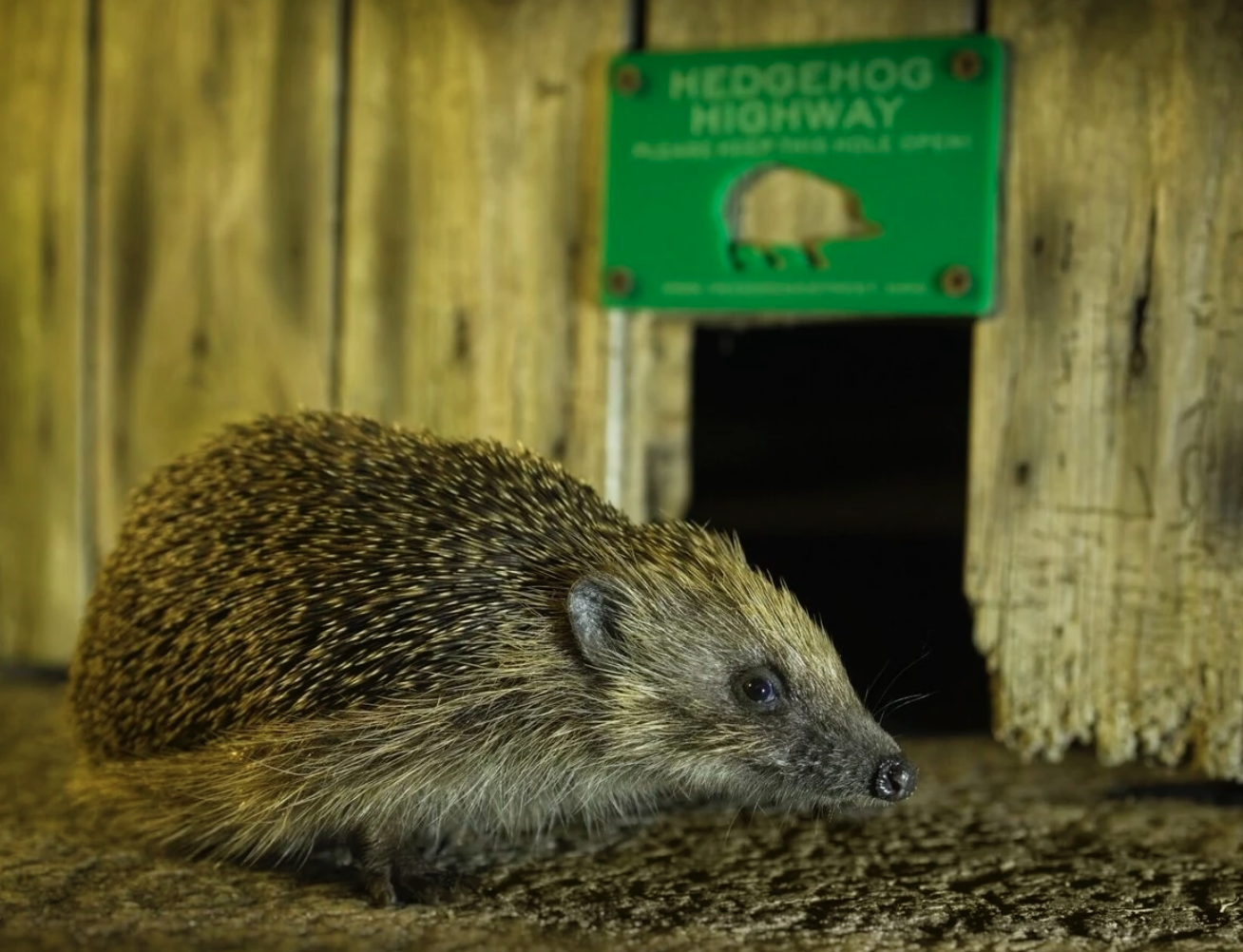
During their active season, hedgehogs roam up to 3km each night, so it’s critical that they can access a wide range of gardens. Creating a square hole in walls or fences (13cm x 13cm) will let hedgehogs through but is too small for most pets. You could also dig a channel underneath your fence to provide access. If you’ve made a hole in your garden wall or fence please record it on The BIG Hedgehog Map so that we can see community progress. Dogs can be a problem for hedgehogs. If you have a dog that is very territorial and likely to attack hedgehogs, obviously your garden won’t be suitable. If there are neighbours with such dogs this should be considered, as hedgehogs will need to travel around your area, not just your garden. Talk to neighbours and create a hedgehog highway in your neighbourhood. Encourage hedgehogs into your garden, but never move one in from another area, as it may well have a nest of dependent young that you would condemn to death.
DANGERS OF SHEDS…
Sheds and outbuildings can be very dangerous for hedgehogs. Keep chemicals, oils, antifreeze etc. in leak-proof containers out of the reach of any hedgehog that might wander in. Some especially hazardous chemicals have sweet smells that can attracts hedgehogs but are lethal if ingested.
If shed doors have been left open for some weeks, be sure to check for nesting hedgehogs before closing the doors. Hedgehogs may also try to nest underneath sheds, so take particular care if you decide to dismantle your shed; we suggest dismantling in October after hoglets have left the nest but before hibernation season.
Spotted a hedgehog?…
Please map your hedgehog sighting. The BIG Hedgehog Map helps us to understand where hedgehogs are in and around Dalbeattie. You can use the QR code below or link here

The Initiative.Scot © 2025 All Rights Reserved